 Skip to content

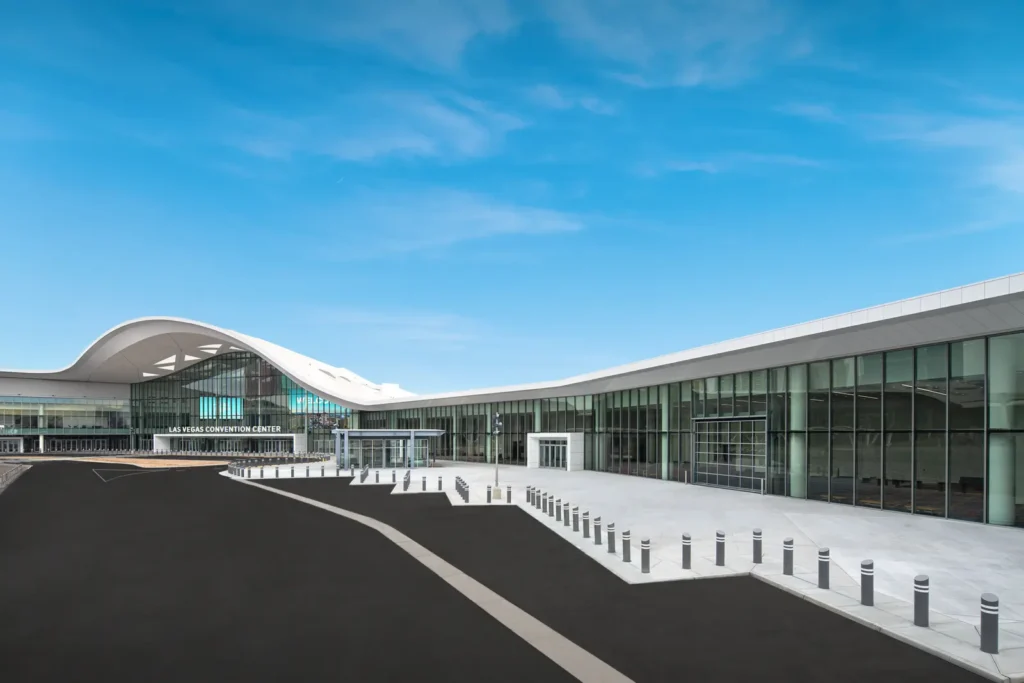
If you’re exhibiting at the Las Vegas Convention Center for the first time, the union rules catch almost everyone off guard. The LVCC is a union facility, and that changes what your own staff can legally do on the show floor versus what must go through union labor. Get it wrong and you face delays, friction on the floor, or a labor bill thousands of dollars higher than it needed to be. Get it right and you can save real money. Here’s the practical breakdown for 2026 — what your team can handle, what needs a union crew, and where the savings actually are.
Quick answer: The Las Vegas Convention Center is a union venue governed by four main unions: Teamsters (freight), Carpenters (install and dismantle), IBEW electricians (all power), and Riggers (overhead hanging). Your full-time employees can set up a booth without ladders or power tools, hand-carry small items, unpack product, and plug into one standard outlet. Anything beyond that — freight handling, electrical, ladders, machinery — needs union labor. Hiring an Exhibitor Appointed Contractor (EAC) instead of the general contractor typically cuts install and dismantle labor by 30 to 45%.
LVCC Exhibitor Labor by the Numbers
The four unions and the cost of getting it wrong.
Rates and jurisdictions vary by show and booth size. Your official exhibitor manual is always the final word.
The overtime trap nobody warns first-timers about
At compressed-schedule shows like CES and SEMA, move-in hall access is so tight that a crew starting at 7 a.m. can hit overtime from the first minute — and overtime runs 1.5x to 2x an already high straight-time rate, applied separately across every union jurisdiction. That’s how a routine install quietly doubles. The two moves that actually protect your budget: book an EAC early (30 to 45% under the general contractor’s rate) and schedule your labor for straight-time windows wherever your show’s move-in calendar allows it. The hotel and the labor bill are the two big controllable costs of a Vegas show — plan both months out, not the week before.
Rooms near the Las Vegas Convention Center sell out fast during show weeks. Compare live rates and lock yours in now.
Compare hotels & book→Las Vegas Is a Union Labor City
The Las Vegas Convention Center, Mandalay Bay, and the Venetian Expo are all union facilities. For most shows you’ll interact with at least four unions, each with its own jurisdiction over specific work on the show floor. These jurisdictions exist for safety and liability reasons, and neither show management nor the general service contractor can exempt you from them. The rules are consistent enough that you can plan around them — but only if you know them before move-in day, not after.
What You Can Do Yourself
Your full-time employees may perform a limited set of tasks, provided they can show proof of employment — a payroll stub, company ID, or business card. This is important: the do-it-yourself option applies to your own staff, not to outside help you bring in.
Your team may set up your own booth display as long as the work needs no ladders and no power tools; hand-carry small items and boxes in through the main entrance; open cartons containing your products and place products on display; plug your own equipment into a single standard 20-amp outlet; use clip-on lights that don’t require a ladder; and clean your own booth. That’s roughly where the do-it-yourself line ends.
What Requires Union Labor
Everything beyond hand-work needs the appropriate union crew. Material handling and freight — anything that can’t be hand-carried — is Teamsters jurisdiction; flatbed carts, dollies, and hand-trucks are not permitted for exhibitors. Electrical work beyond plugging into a single outlet (distribution, hardwiring, signs, most AV) is IBEW. Install and dismantle requiring tools or ladders — booth structures, carpet laying, overhead work — is Carpenters. Overhead hanging and heavy lifting (suspended signs, rigging) is Riggers; at the LVCC the general service contractor, typically Freeman, is the exclusive provider of rigging labor. Note also that certain halogen lamps are restricted at the LVCC, and the venue enforces height limits and fire-safety rules directly.
The Four Unions, Briefly
- Teamsters (Local #631) — freight and material handling. They move your crates between the docks and your booth space using certified forklift operators. You order this through the material-handling form in your exhibitor manual.
- Carpenters (IBCJA) — installation and dismantling of exhibit structures, plus carpet.
- IBEW electricians — all electrical connections, AV installation, and anything drawing building power.
- Riggers — suspension of overhead signs and operation of heavy lifting equipment.
How to Actually Save Money
The single biggest lever is who does your install and dismantle. Using an Exhibitor Appointed Contractor (EAC) instead of the show’s general contractor typically saves 30 to 45% on install and dismantle labor. On a 20×20 island build, where general-contractor rates run $165 to $225 per hour with overtime multipliers, that difference can reach $5,000 to $15,000 per show. The catch: your EAC must be approved through the show organizer’s exhibitor portal before move-in — not through the LVCVA directly — and must file the required paperwork (certificate of insurance, Nevada contractor’s license documentation, crew credentials, and a union jurisdiction acknowledgment).
- Avoid unnecessary overtime. Straight-time is 8 a.m. to 5 p.m., Monday to Friday, with a midday lunch break. Evenings, weekends, and compressed early move-ins trigger 1.5x to 2x rates. Schedule inside straight-time windows wherever your show allows.
- Order in advance. Advance rates on services are meaningfully cheaper than on-site rates, and submitting full payment plus floor plans by the deadline saves a significant percentage.
- Rent locally. For many exhibitors, renting a booth from a Las Vegas vendor beats shipping one cross-country and paying drayage on the weight.
Union labor is only one line in a much bigger exhibitor budget. For the full picture — booth space, drayage, electrical, staff and travel — see our breakdown of the real cost to exhibit at CES in Las Vegas.
The Rules Vary — Always Check Your Manual
Union jurisdictions and labor classifications shift a little depending on the show, the venue, and your booth size. This guide covers the general framework at the LVCC, but your official exhibitor manual — sent by your show organizer — is always the final word, and your designated show-management or general-contractor representative can confirm the specifics for your event. When in doubt, ask before move-in, not during it.
Exhibiting at an LVCC show?
Your labor bill is one big controllable cost — your hotel is the other. Lock a well-located room early, before convention-week rates climb.
Compare LVCC hotel rates→Exhibitor cost calculator →